
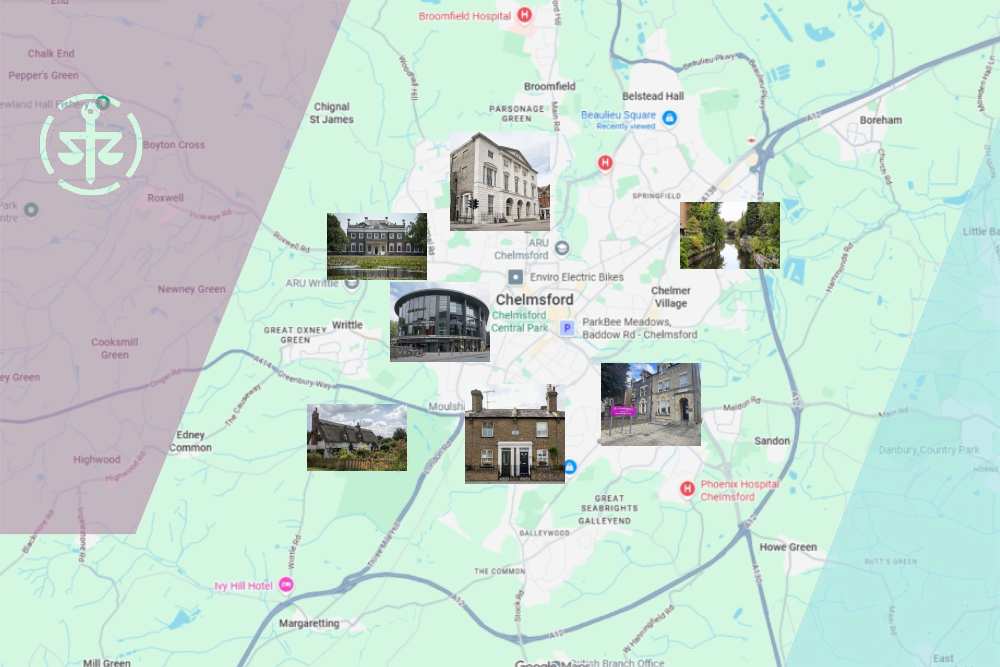
The city of Chelmsford is a popular location for first-time buyers in the East of England – and it’s not hard to see why.
Fast trains to Liverpool Street, a genuine city feel, excellent schools, plenty of green space, and a property market that still offers real value compared to London make it a compelling choice for buyers taking their first step onto the ladder.
Cunningtons conveyancing solicitors in Chelmsford work with first-time buyers across Chelmsford every day; and we see time and again that buyers who have the smoothest moving experience tend to be those who understand what they’re getting into before they start. This article is our honest take on what first-time buyers should expect, what catches them out, and what you can do to give your purchase the best possible chance of going through smoothly.
The first-time buyer market in Chelmsford has changed noticeably over the past few years. The buyers we’re seeing most often fall into a few recognisable groups:
- London commuters who’ve embraced hybrid working. With two or three days a week in the office now the norm for many professionals, Chelmsford’s fast rail connection to Liverpool Street makes it genuinely viable as a place to call home. Travel times come in at around 30 minutes – faster than many tube commutes.
- Young professional couples looking to upsize. Couples who’ve been renting in London or inner Essex and want a proper home – with a second bedroom, a garden, more room to grow – find that Chelmsford gives them considerably more for their money.
- Buyers starting families. A range of schools, parks, and a community feel attract buyers who are thinking ten years ahead, not just the next two.
- Essex renters who’ve done their maths. With significant rent rises, many tenants have realised that mortgage payments for a comparable property are now in the same ballpark. The shift from renting to buying feels more achievable than it did even a few years ago, particularly for buyers using Lifetime ISAs or other savings tools they’ve had running in the background.
Most people start their Chelmsford search thinking “Chelmsford is Chelmsford.” It isn’t.
Springfield, Moulsham, Beaulieu, Great Baddow, and Chelmer Village all have distinctly different characters, property types, price points, and vibes. Buyers who haven’t spent time in each area often find themselves recalibrating their search once they start viewing – which is completely normal, but it does take time.
Our advice: before you instruct a solicitor or get too deep into the process, spend a few weekends in the different parts of Chelmsford you’re considering. The differences are real and they matter.
The landscape of first-time buyer support has changed significantly in recent years, and not everything that exists is worth pursuing. Here’s our honest assessment of what we’re currently seeing work in practice:
- Lifetime ISAs (LISAs) remain the most commonly used tool among the buyers we work with. They’re straightforward, the 25% government bonus is genuinely valuable, and most buyers have had one running for a year or two before they start seriously searching. The main frustration is the £450,000 property cap – in Chelmsford’s current market, that rules out a significant portion of properties.
- Shared Ownership works well for some buyers, but go in with your eyes wide open. Many buyers underestimate the ongoing costs: rent on the unowned share, service charges, reserve fund contributions, and restrictions on renting or selling later. Staircasing sounds simple but comes with its own legal costs each time.
- 95% mortgages have become more widely available and are a practical option for buyers who have saved a 5% deposit but aren’t yet in a position to put down more.
- Developer incentives on new builds – particularly on larger new estates around Chelmsford – can include contributions to stamp duty, legal fees, or deposit support. These vary enormously, so it’s worth asking specifically what’s on offer.
This is probably the area where expectations and reality diverge most sharply. Many buyers assume a mortgage offer means they’re nearly done, searches are quick, and the whole thing can be wrapped up in a few weeks.
The reality: conveyancing typically takes between 12 and 16 weeks from instructing your solicitor to completion, sometimes longer. The process involves your solicitor, the seller’s solicitor, your mortgage lender, the local authority, water and drainage authorities, search providers, sometimes management companies, and often multiple other parties further up the chain – none of whom are under any obligation to move at your pace.
When things feel quiet, it’s almost never because nothing is happening – it’s usually because you’re waiting for a third-party response outside anyone’s control. The best thing you can do is ask your solicitor to explain exactly what stage you’re at and what is currently being waited for.
Exchange of contracts is the point at which the transaction becomes legally binding. Before exchange, either party can walk away (though you may lose any costs already incurred). After exchange, a completion date is fixed and both parties are contractually committed to the sale. At this point you’ll typically pay your deposit.
Completion is the day you get the keys. Money transfers from your solicitor to the seller’s solicitor, the title is registered in your name, and the property is yours.
The gap between exchange and completion is usually one to four weeks, though it can be longer if the chain requires it. Until exchange happens, nothing is certain – which is why we always advise buyers not to book removals or give notice on a rental property until contracts have actually been exchanged.
If you’re buying a flat or certain types of new-build property in Chelmsford, you may find your new home is leasehold rather than freehold. As well as the purchase price and standard conveyancing, you’ll need to understand these questions:
- Ground rent – is it a fixed amount, or does it escalate? Escalating ground rent clauses have caused significant problems for owners trying to sell or remortgage.
- Service charges – what’s included, and how much have they increased in recent years?
- Reserve fund – is there money set aside for major repairs, or will leaseholders be asked to contribute to a large bill further down the line?
- Management company – who manages the building, and what’s their track record?
- Lease length – a lease with fewer than around 80 years remaining can cause mortgage and resale difficulties. Extending a lease has a cost, and that cost rises as the lease gets shorter.
- Restrictions – some leases include restrictions on pets, subletting, or alterations that buyers only discover late in the process.
We will go through all of these issues with you carefully. If anything gives us cause for concern, we’ll tell you clearly – and in plain English. The added complexity of leasehold explains why conveyancing costs for a leasehold home are higher than for a freehold property of the same price.
Conveyancing and surveys are two separate things. Conveyancing deals with the legal title to the property. A survey deals with the physical condition – the structure, the roof, damp, and anything else a surveyor can inspect.
Commission a full independent survey from a qualified surveyor before you exchange. If a survey reveals something significant – a structural issue, a roof that needs replacing, damp that wasn’t disclosed – you have options: renegotiate, ask the seller to remedy the issue, or walk away. After exchange, those options are gone.
This matters particularly in Chelmsford’s new-build market, where buyers sometimes assume a new property doesn’t need a survey. New builds can and do have snagging issues, some of which are serious. A new-build snagging survey is a worthwhile investment.
Thorough conveyancing protects you legally. A good survey protects you physically. You need both.
There are several significant new developments around Chelmsford – you can see them on the council website. If you’re considering a new-build, these are the questions worth asking before you proceed:
- What are the estate management charges? Many new estates have ongoing charges for shared spaces, even on freehold properties. These are not always clearly disclosed upfront.
- Are the roads and sewers adopted? Until adopted by the local authority and water company, the developer remains responsible. If the developer runs into difficulties, this can become a problem for residents.
- What warranties are included? Most new builds come with a 10-year structural warranty such as NHBC Buildmark. Make sure you understand what it covers and what it doesn’t.
- What incentives are available? Developers on larger schemes often offer contributions to legal fees, stamp duty support, or deposit assistance. Always worth asking directly.
- Are there restrictions on alterations, pets, or parking? Some new-build plots come with restrictions buyers only discover when they read the title documents carefully. We will flag up anything unusual.
Our job is to handle the legal side of your purchase: investigating the title, raising and responding to enquiries, managing searches, liaising with your mortgage lender, and ultimately getting you to a safe exchange and completion.
What we can’t do is control the pace of other parties, speed up local authority search returns, or force a chain to move. What we can do is keep you informed of current and future property market legislation, explain clearly what’s happening at each stage, answer your questions promptly, and make sure that when things are in our hands, they move as quickly as possible.
If you’re buying your first home in Chelmsford and would like to know more about our fixed-fee conveyancing service, we’d be happy to help. Ask for your free conveyancing quote today.
If you’d like to discuss your move with our conveyancing team, call us free on 0800 977 7887 for a no-obligation quote, or email quotes@cunningtons.co.uk. We’re happy to talk it through.